Product, Insight
Stop Waiting for Reports: Get Ad-Hoc Patient Insights Instantly with Wren AI
Transform complex medical data into immediate, actionable answers through simple conversational queries, no manual analysis required.
Pin Chang
Updated: Oct 19, 2025
Published: Sep 30, 2025
Picture this: A 52-year-old patient visits her doctor for a routine check-up. On the surface, everything seems normal: no major complaints, just the everyday stress of balancing work and family. But the data reveals a different story. Her cholesterol has been rising for years, her blood pressure is slightly above average, and she has a family history of stroke.

This is where Wren AI can change the outcome. Instead of waiting for a crisis, Wren AI enables clinicians to spot risks early and intervene before a medical emergency occurs.
Why Healthcare Needs Wren AI
Healthcare is one of the most data-intensive industries in the world. Every lab test, hospital visit, prescription, and lifestyle detail generates valuable information. Yet most of this data goes underutilized because:
- It’s often fragmented across multiple systems.
- Physicians don’t have the bandwidth to analyze thousands of variables per patient.
- Risk models rely too heavily on population averages instead of personalized data.
As a result, opportunities for prevention are missed.
How Wren AI Helps
Wren AI can address these exact challenges by making patient risk analysis more precise, contextual, and actionable:
- Unified Patient Profiles: Integrates medical history, lab results, and lifestyle factors into one comprehensive view.
- Deep Context with MDL: Using Modeling Definition Language (MDL), Wren AI applies clinically relevant logic so queries reflect real-world healthcare scenarios. In healthcare settings, these same semantic definitions, paired with row-level access controls, keep sensitive patient data governed while still enabling instant self-service answers.
Knowledge: Instructions

Knowledge: Question-SQL Pairs
- Pattern Detection: Finds hidden risk signals, such as the combined effects of smoking, moderate hypertension, and age.
- Real-Time Insights: Provides clinicians with instant, data-backed recommendations, saving hours of manual analysis.
- Empowered Teams: Even non-technical staff can explore patient data through conversational analytics, supporting population health management, triage, and resource planning with continuously updated dashboards.
Real Scenarios: Wren AI in Patient Risk Analysis
- Analyze Age-Specific Risk
A care team asks Wren AI:
“What is the diabetes prevalence by age bracket in our database?”
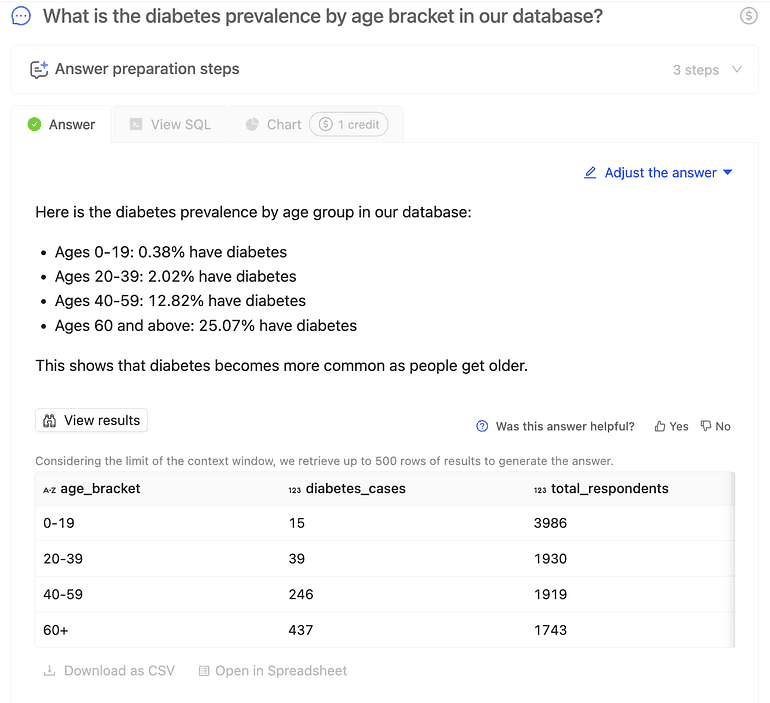
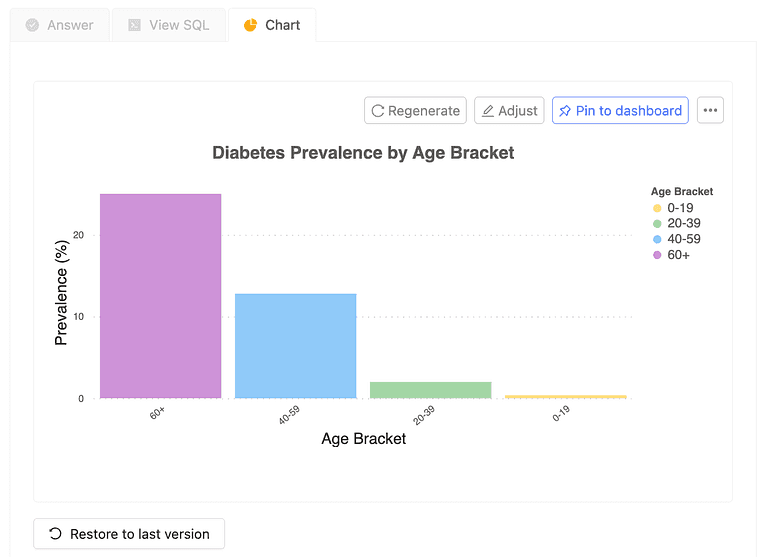
Within seconds, Wren AI identifies the highest-risk groups and generates charts ready for reports.
To go deeper, they ask:
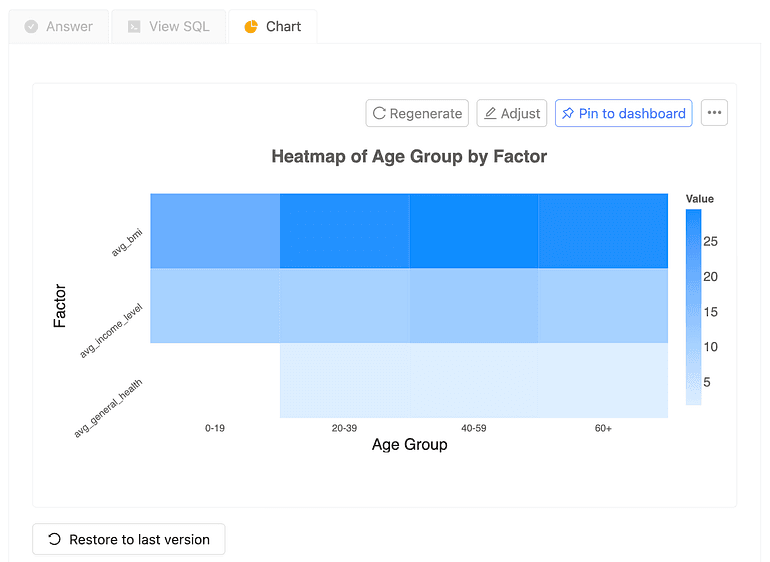
“Which other factors, like BMI, income level, or general health, most strongly predict diabetes risk among different age groups?”
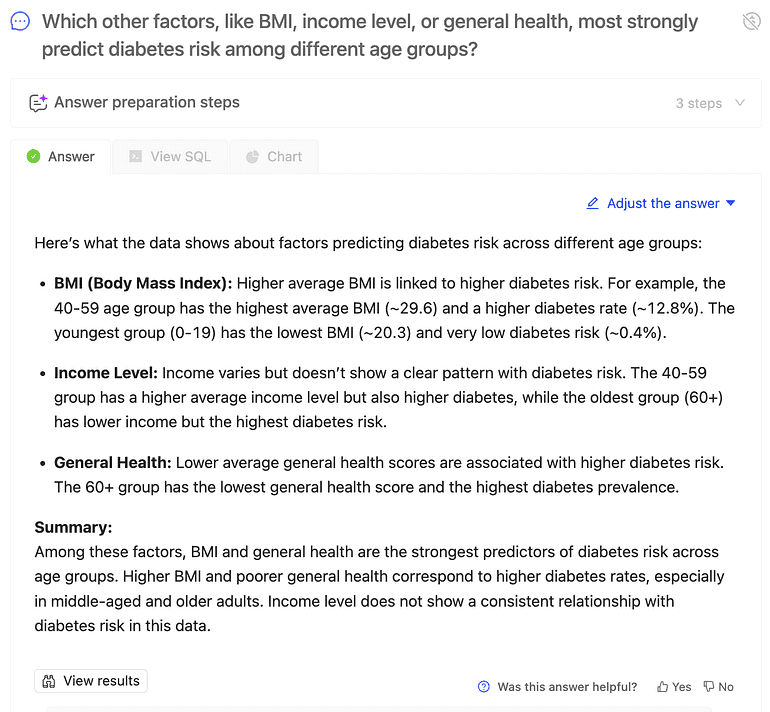
With this insight, clinics can design precise prevention programs rather than relying on broad, one-size-fits-all campaigns.
2. Quantifying Smoking’s Impact on Stroke Risk
A clinician types:
“Compare stroke rates between smokers and non-smokers, controlling for age and hypertension.”
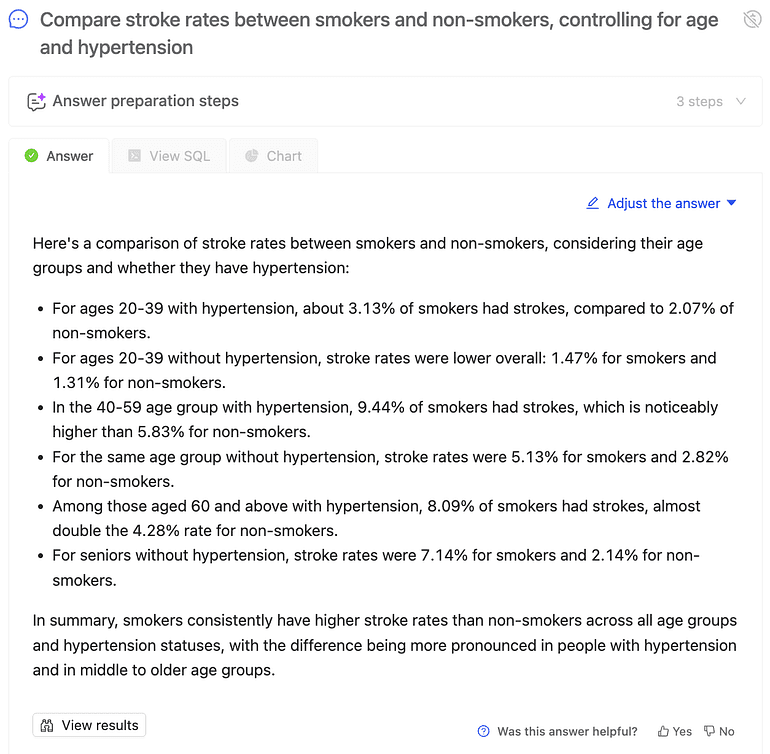
Wren AI instantly returns visualizations and a summary.
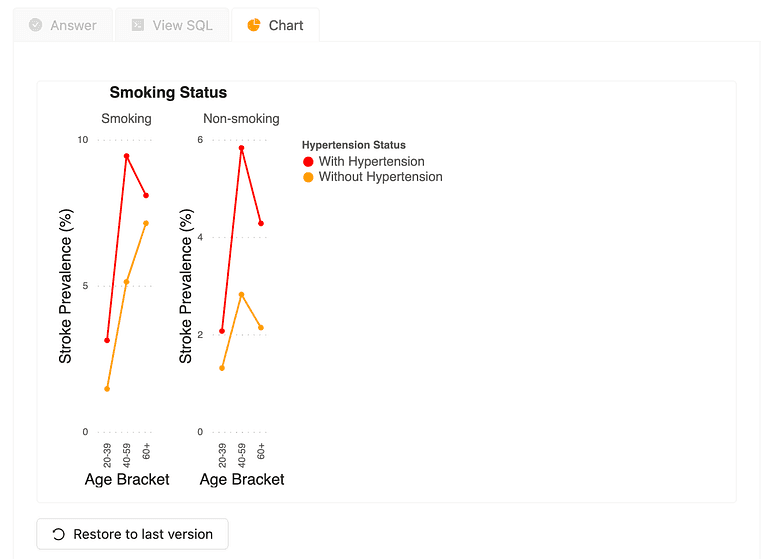
For an even more actionable view, the clinician asks:
“What is the predicted effect of smoking cessation on stroke risk over the next five years for patients with high cholesterol and hypertension?”
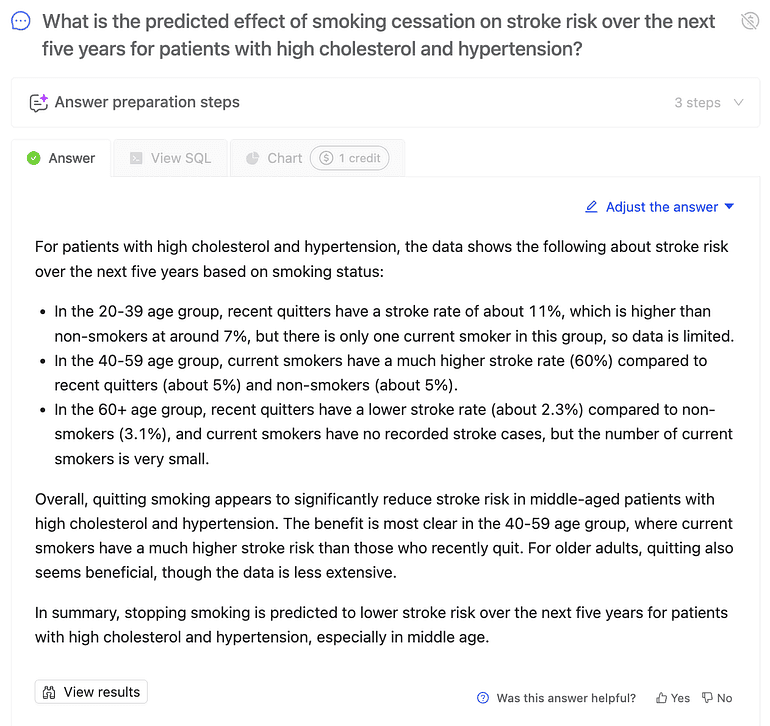
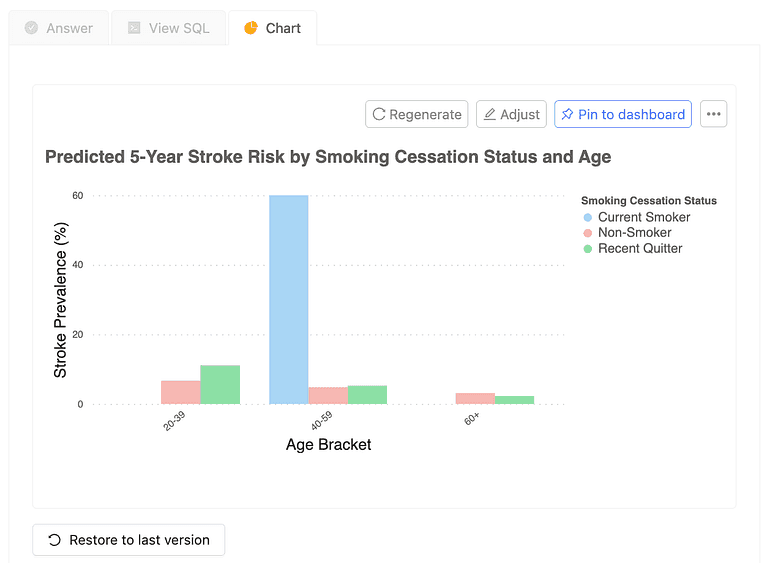
Due to data limitations, Wren AI is unable to provide time-series predictions. However, the chart indicates that individuals in the middle-aged group who quit smoking show a lower risk of stroke. This suggests that smoking cessation can significantly reduce stroke incidence, offering physicians compelling evidence to encourage positive behavioral change.
Conclusion
AI won’t replace physicians. It amplifies their expertise. By transforming complex data into predictive insights, Wren AI enables healthcare to shift from a reactive to a proactive approach. In healthcare, the real breakthrough isn’t treatment. It’s anticipating and preventing illness.
Prevention is the new cure.
Ready to transform how your organization accesses data? Request a demo or start your free trial at getwren.ai
See governed GenBI in action
Watch short demos of Wren AI turning business questions into governed SQL, charts, and reusable GenBI apps.
Watch product demosRelated posts
Beyond Dashboards How Conversational AI is Revolutionizing Structured Finance Analytics
How Wren AI transforms complex financial data into instant, actionable insights through natural language, no technical expertise required
Aug 20, 2025Game On: How Wren AI Transforms Backend Gaming Data Into Actionable Insights
How Wren AI Turns Natural-Language Questions Into Cost-Efficient SQL to Accelerate Insights from Gaming Data
The Wren Journal
Get the next deep dive in your inbox
Practical GenBI guides, product updates, and customer lessons from the Wren AI team. A couple of emails a month, no noise.

Keep reading
Insight, Trend
Beyond Dashboards How Conversational AI is Revolutionizing Structured Finance Analytics
How Wren AI transforms complex financial data into instant, actionable insights through natural language, no technical expertise required
Insight, Product, Trend
Game On: How Wren AI Transforms Backend Gaming Data Into Actionable Insights
How Wren AI Turns Natural-Language Questions Into Cost-Efficient SQL to Accelerate Insights from Gaming Data